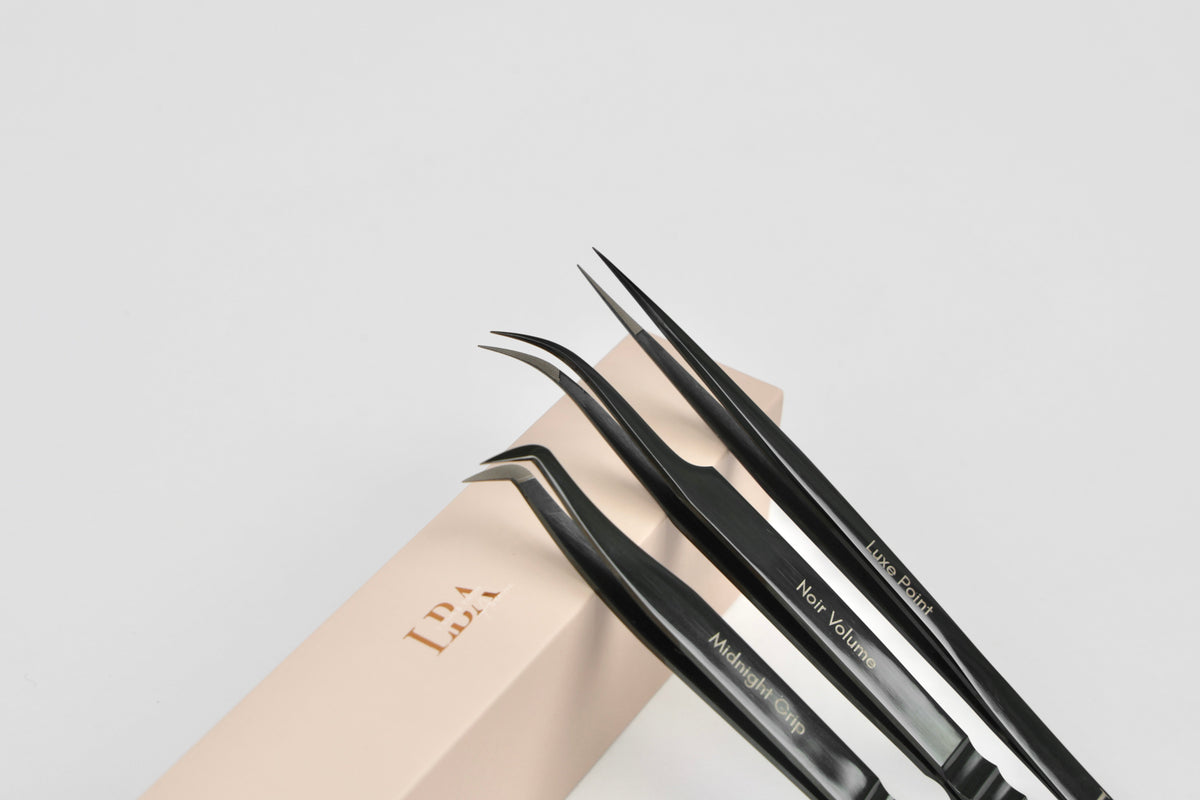
How to Care for Lash Tweezers and Keep Them Clean
Knowing how to care for lash tweezers is an important part of maintaining professional lash tools. Dried adhesive needs to be removed from precision tips, reusable tools need appropriate between-client hygiene, and clean tweezers should be thoroughly dry and stored where their delicate tips are protected.
One important distinction is that removing visible lash adhesive is not automatically the same as completing your professional cleaning, disinfection or other required reprocessing procedure. Lash & Brow Avenue's dedicated Lash Extension Tweezer Cleanser is designed specifically to remove dried adhesive, while its professional tweezer pages separately direct technicians to clean and disinfect reusable tweezers after clients.
Quick Answer: How Should You Care for Lash Tweezers?
A practical professional lash tweezer routine includes four parts:
-
Remove dried adhesive residue using a product designed for lash tweezer maintenance.
-
Follow the appropriate cleaning, disinfection or reprocessing procedure for the tool and its intended use.
-
Make sure tweezers are clean and properly dry.
-
Store them securely so the precision tips are protected from impact, dust and unnecessary damage.
Australian personal appearance guidance also emphasises cleaning reusable equipment between clients, keeping equipment in good working order and storing cleaned tools appropriately. The exact level of reprocessing depends on the tool's intended use, relevant requirements and manufacturer instructions.
💡 Helpful insight: "Clean-looking" and professionally reprocessed do not mean the same thing. Removing visible adhesive is tool maintenance. Your required hygiene procedure is a separate consideration.
Why Does Lash Tweezer Care Matter?
Professional lash tweezers rely on precise tips.
Adhesive residue around the working area can interfere with the gripping surface, while accidental impact or poor storage can damage delicate tips. LBA's tweezer cleanser is specifically designed to remove dried lash adhesive, and its protective case is intended to help reduce bending, chipping, scratches and other accidental damage.
Tweezer care is therefore about more than appearance.
It helps you maintain:
-
Clean professional tools
-
Clear, unobstructed precision tips
-
Reliable grip and alignment
-
An organised workstation
-
Appropriate between-client hygiene
-
Protected storage between appointments
-
Better visibility of wear or damage
For reusable professional equipment more broadly, NSW Health states that equipment should be in good working order, cleaned and dried after use and kept in a clean, dry condition.
What Is the Difference Between Removing Lash Glue and Cleaning Tweezers?
This distinction is one of the most important parts of professional tweezer care.
A lash tweezer cleanser can be formulated to dissolve adhesive residue. Professional hygiene procedures address contamination and the appropriate reprocessing of reusable equipment.
They should not automatically be treated as the same step.
| Tweezer-care task | Main purpose | What to remember |
|---|---|---|
| Remove dried lash adhesive | Clears glue residue from the working tips | Use a product intended for tweezer adhesive removal |
| Clean the reusable tool | Removes contamination and prepares the tool for any further required processing | Follow professional procedures and manufacturer directions |
| Disinfect or otherwise reprocess | Applies the required level of reprocessing for the tool's intended use | Follow local requirements, risk classification and product instructions |
| Dry the tweezer | Keeps the tool ready for appropriate storage | Ensure it is properly dry before storing |
| Protect and store | Reduces exposure to dust and accidental physical damage | Store clean, dry tweezers securely |
Queensland Health states that reusable instruments and equipment used in personal appearance services must undergo reprocessing between clients, with the minimum process determined by the risk associated with the item's intended use and relevant instructions.
How Do You Remove Dried Lash Adhesive From Tweezers?
Lash & Brow Avenue's verified Lash Extension Tweezer Cleanser uses pre-soaked sponge pads specifically for dried adhesive removal.
Its current directions are straightforward:
-
Open the tweezer cleanser.
-
Insert the tweezer tips gently into the pre-soaked sponge.
-
Twist the tweezers several times to loosen adhesive residue.
-
Remove them from the sponge.
-
Wipe the tips dry with a lint-free cloth or paper towel.
-
Repeat if necessary when adhesive remains.
The product is designed for professional lash extension tweezers, including isolation, volume and classic lash tools.
Is Tweezer Cleanser the Same as Disinfectant?
Do not assume so.
The verified LBA product page defines its Tweezer Cleanser primarily as a product for dissolving and removing dried lash adhesive. Separately, LBA's professional Silk Precision Tweezer directions tell technicians to clean and disinfect the reusable tool after every client according to professional salon hygiene procedures.
This means adhesive removal should not be presented as a complete substitute for the appropriate reprocessing process.
Follow the directions for your tools, cleaning or disinfecting products and the requirements applying to your business.
💡 Helpful insight: A glue-free tweezer may look clean, but visible cleanliness alone does not confirm that your professional hygiene requirements have been completed.
Should Lash Tweezers Be Cleaned Between Every Client?
Reusable professional tools should be handled according to the hygiene process required for their intended use.
Lash & Brow Avenue's Silk Precision Tweezer instructions explicitly state that the tweezer should be cleaned and disinfected after every client following professional salon hygiene procedures. The LBA Tweezer Bundle gives the same direction for its reusable professional tweezer sets.
Queensland Health also states that reusable instruments and equipment used in personal appearance services need reprocessing between clients to help prevent infection.
The exact reprocessing method should not be guessed from a blog article alone. It depends on factors including:
-
How the instrument is used
-
Its manufacturer's instructions
-
Applicable state or territory requirements
-
The cleaning or disinfecting product being used
-
Your business infection-control procedures
If you are unsure which level of reprocessing applies to your lash tools, check the relevant guidance for your location and your professional training.
How Should You Clean Fibre Tip Lash Tweezers?
Fibre-tip lash tweezers still require professional tool care.
The current Fibre Tip Silk Precision Tweezer is made from professional-grade stainless steel with textured fibre-tip technology. LBA instructs technicians to clean and disinfect it after each client.
Because the textured tips are part of the tool's gripping surface, keeping adhesive build-up away from them is particularly relevant to normal maintenance.
Use adhesive-removal products according to their directions, and do not assume that a method suitable for one tweezer material or finish is automatically appropriate for another.
Always check the instructions supplied with the individual tool and any cleaning products you use.
How Often Should You Remove Adhesive Build-Up?
Do not wait for heavy build-up if you can see lash adhesive accumulating on the working area.
The current LBA Tweezer Cleanser instructions state that the product can be used between clients or whenever adhesive begins to accumulate.
However, adhesive removal frequency and professional reprocessing frequency are not necessarily identical concepts.
You might remove a small amount of glue during a workday because it interferes with the gripping area, while still following your complete between-client hygiene procedure separately.
This distinction helps prevent a common maintenance mistake: using a quick glue-removal step as though it completes every hygiene requirement.
What Should a Good Lash Tweezer Care Routine Include?
A professional routine should address adhesive, hygiene, inspection, drying and storage.
| Stage | Practical check |
|---|---|
| During the appointment | Watch for adhesive collecting on the working tips |
| After use | Remove adhesive residue with a suitable professional product when needed |
| Between clients | Complete the cleaning and reprocessing procedure required for the reusable tool |
| Before storage | Check that the tweezer is clean, dry and visibly undamaged |
| Storage | Protect precision tips in a clean, secure case or tool area |
| Before the next client | Check condition, cleanliness and tip alignment before use |
This routine is intentionally general because local requirements and tool classifications can vary.
For Australian beauty businesses, NSW Health recommends documented cleaning and maintenance procedures for equipment and states that equipment should be maintained in good working order.
Why Should Lash Tweezers Be Completely Dry Before Storage?
Clean tools should not simply be placed straight into a closed case while still damp.
NSW Health guidance for beauty equipment emphasises cleaning and drying after use and keeping equipment in a clean and dry condition. Its reusable instrument guidance also stresses proper drying during instrument reprocessing.
Lash & Brow Avenue gives the same practical storage direction for its Tweezer Case: make sure tweezers are clean and dry before placing them into the case.
Once dry, place each tool into its designated position rather than leaving precision tweezers loose in a trolley or bag.
How Should Lash Tweezers Be Stored?
A protective case can help prevent unnecessary damage to delicate tips.
The verified Lash Tweezer Case is designed to hold up to four professional tweezers. It has a protective exterior and soft interior lining intended to help protect the tools from dust, scratches and accidental damage.
LBA's directions are to:
-
Make sure the tweezers are clean and dry.
-
Place each tweezer securely in its slot.
-
Close the case.
-
Store it safely in the workstation, trolley or travel kit.
-
Wipe the case clean as required.
This can be particularly useful for mobile lash artists and beauty students who transport their tools regularly.
💡 Helpful insight: A quality tweezer can still become unusable if the precision tips are bent or damaged. Tool storage deserves the same attention as tool selection.
Should Clean and Used Tweezers Be Kept Separate?
A professional workspace should avoid mixing tools that are ready for use with tools that still need reprocessing.
Queensland's personal appearance infection-control guidance describes reusable equipment as requiring reprocessing between uses and emphasises appropriate storage after processing. NSW guidance similarly separates unclean equipment from cleaned and processed instruments in relevant reprocessing workflows.
Your specific setup will depend on your salon, services and applicable requirements, but the underlying principle is simple: do not place a used tool back with clean, ready-to-use tweezers before completing your required hygiene process.
What If You Drop a Lash Tweezer?
Stop and inspect it before putting it straight back into professional use.
Precision tweezers depend on correctly functioning tips. LBA's storage case is specifically designed to help prevent bending, chipping and accidental tip damage, which highlights why physical protection matters.
Check whether:
-
The tips still meet correctly
-
The alignment appears unchanged
-
There is visible bending or chipping
-
The tension feels normal
-
The tool can still be appropriately cleaned and maintained
If a damaged tweezer no longer performs as intended, reassess whether it belongs in your active professional kit.
Can You Soak Lash Tweezers in Any Cleaning Solution?
Do not assume that every solution or soaking method is suitable.
Cleaning and disinfecting products have their own concentrations, contact times, material compatibility and usage instructions. Australian health guidance repeatedly emphasises following manufacturer directions when reprocessing reusable equipment.
The verified LBA Lash Extension Tweezer Cleanser specifically states that no soaking is required for its adhesive-removal process. Instead, the tips are inserted into the pre-soaked sponge and twisted to remove residue.
Always distinguish between:
-
Removing dried adhesive
-
Cleaning the tool
-
Disinfecting or otherwise reprocessing it
-
Storing the tool
Each stage may involve different instructions.
How Can Beauty Students Build Good Tweezer-Care Habits?
Good tool habits are easier to learn early than correct later.
Beauty students can practise a simple professional workflow:
-
Keep used and ready-to-use tools organised separately.
-
Check for adhesive residue during practice.
-
Remove glue using a product intended for professional lash tweezers.
-
Follow training and approved hygiene procedures.
-
Dry tools correctly.
-
Inspect precision tips before storage.
-
Keep tweezers secured rather than loose in a kit.
Lash & Brow Avenue currently lists beauty students among the suitable users for its Silk Precision Fibre Tip Tweezer, Lash Extension Tweezer Cleanser and Tweezer Case.
Students should continue to follow their training, manufacturer directions and local infection-control requirements before using professional tools on clients.
What Lash Tweezer Care Products Can You Shop Online?
The Lash & Brow Avenue online store currently has several verified products relevant to professional tweezer maintenance.
The Lash Extension Tweezer Cleanser is designed for removing dried lash adhesive from professional tweezers using pre-soaked sponge pads.
The Lash Tweezer Case provides protected storage for up to four tweezers once they are clean and dry.
Artists replacing or expanding their tools can browse the Lash & Brow Avenue Tweezers collection, which currently includes professional fibre-tip lash tweezers, bundles and storage accessories.
Key Takeaways
Learning to care for lash tweezers involves more than wiping away visible glue.
Use a dedicated tweezer-maintenance product when dried adhesive needs to be removed, but remember that adhesive removal is not automatically a substitute for the cleaning, disinfection or other reprocessing procedure required for your reusable professional tools.
Follow manufacturer instructions and the infection-control requirements that apply to your services and location.
Make sure tweezers are properly dry before storage.
Protect precision tips from accidental impact by storing clean tools securely rather than leaving them loose in a workstation or travel kit.
Finally, inspect your tweezers regularly. A professional tool needs to be both hygienically maintained and physically suitable for accurate lash work.
Frequently Asked Questions
How do you clean lash tweezers?
Remove dried adhesive with a product intended for professional tweezer maintenance, then complete the cleaning and reprocessing procedure required for your reusable tools. Follow manufacturer directions and your local professional hygiene requirements.
How do you remove dried lash glue from tweezers?
The LBA Lash Extension Tweezer Cleanser uses pre-soaked sponge pads. Its directions say to insert the tips gently, twist several times to loosen adhesive, remove the tweezers and wipe them dry.
Is lash tweezer cleanser the same as disinfectant?
Do not assume it is. LBA's Tweezer Cleanser is specifically described as an adhesive-removal product, while LBA tweezer directions separately require cleaning and disinfection after clients.
Should lash tweezers be cleaned after every client?
Current LBA professional tweezer instructions state that reusable tweezers should be cleaned and disinfected after every client following professional salon hygiene procedures.
How should fibre tip tweezers be cleaned?
Follow the instructions for the specific fibre-tip tool and the products used to clean it. The LBA Silk Precision Tweezer directions require cleaning and disinfection after every client.
Should lash tweezers be dry before storage?
Yes. LBA directs users to make sure tweezers are clean and dry before placing them in its protective Tweezer Case. NSW Health also states that beauty equipment should be cleaned and dried after use.
How should lash tweezers be stored?
Store clean, dry tweezers securely where precision tips are protected. The LBA Tweezer Case holds up to four professional tweezers and uses a soft protective lining.
Where can I buy lash tweezer care products in Australia?
You can browse the verified Lash & Brow Avenue Tweezers collection and the Lash Extension Tweezer Cleanser online.
Keep Your Professional Lash Tools Clean and Protected
Professional lash tweezers work best when tool maintenance becomes part of your regular salon routine.
For dried adhesive maintenance, explore the Lash Extension Tweezer Cleanser. Once your tweezers have completed the appropriate hygiene process and are clean and dry, the Lash Tweezer Case can help keep precision tools organised and protected.
You can also browse professional lash tweezers online through Lash & Brow Avenue and compare individual fibre-tip tools and tweezer bundles for your professional kit.
Always use professional tools according to your training, manufacturer directions and the hygiene requirements that apply to your beauty business.